More Effective Leg Workouts
 “Leg day” is not usually something that gets people SUPER excited. We have all seen the endless memes reminding people NOT to skip leg day, but why do people have such a hard time training doing leg workouts?
Sure, I get it, lower body based movements because they use SO many big muscles of the body make exercises way more challenging and exhausting. However, I could easily make the argument that smart leg workouts are a HUGE key in achieving not only results in the lower body, but all over!
Let’s get the easy stuff out of the way first. If we realize that good leg workouts involve not only the big muscles of the lower body, but the core and upper body as well, we find there are no better fat loss and muscle building exercises. That means leg workouts fit so many of most people’s fitness goals that they have to be the center piece of what we do.
Okay, the less obvious stuff. Outside of just hating hard work (heck, results don’t come from lack luster effort), many people hate leg workouts because they often hurt. So many people have low back and knee issues that the idea of doing leg workouts makes them grimace and question if going to the gym is even a good idea.
“Leg day” is not usually something that gets people SUPER excited. We have all seen the endless memes reminding people NOT to skip leg day, but why do people have such a hard time training doing leg workouts?
Sure, I get it, lower body based movements because they use SO many big muscles of the body make exercises way more challenging and exhausting. However, I could easily make the argument that smart leg workouts are a HUGE key in achieving not only results in the lower body, but all over!
Let’s get the easy stuff out of the way first. If we realize that good leg workouts involve not only the big muscles of the lower body, but the core and upper body as well, we find there are no better fat loss and muscle building exercises. That means leg workouts fit so many of most people’s fitness goals that they have to be the center piece of what we do.
Okay, the less obvious stuff. Outside of just hating hard work (heck, results don’t come from lack luster effort), many people hate leg workouts because they often hurt. So many people have low back and knee issues that the idea of doing leg workouts makes them grimace and question if going to the gym is even a good idea.
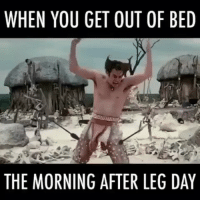 Paralyzing yourself is not the goal of good leg workouts!
This whole fear isn’t helped by the fact that they internet is full of conflicting information on how to perform leg workouts correctly. So, what are some keys we can learn to help us achieve better results and actually not HATE something that is suppose to make us feel our best?
Key 1: Squats and Deadlifts are foundational, but now where leg workouts stop.
I’ve written quite a bit that people love to say simple sound bites like “just squat and deadlift” and you will be okay. Yes, learning the foundations of both are important, but for a different reason than most would tell you.
Understanding how to squat and deadlift properly helps us understand the foundations of both the squat and hip hinge patterns. As we build strength and proficiency we develop the ability to perform more sophisticated exercises.
Wait?! Aren’t squats and deadlifts plenty difficult for most to get results for years? Yes and no, how do you like that answer;) What I mean is yes, people can get results from a myriad of squats for some time. That is if we choose to look at what each type of squat provides us. In DVRT not all squats are equal so we can’t just think about doing hard core leg workouts, but we have to think about the other qualities we are building in functional fitness. So, choosing the RIGHT deadlift or squat is equally as important as doing both.
https://www.instagram.com/p/Bqsdb8ghvhu/
DVRT Master, Cory Cripe, shows that squats can be changed quite a bit by just different ways we hold the weight.
The no part comes when we look at when we only pattern the more common squat and deadlift we miss what the lower body muscles ACTUALLY do!
As I’ve often written, our body is not designed to function in the gym, it is designed for a very primitive world. When you think about it, what we would do more than ANYTHING is walk and run in the more “natural” world. That means our body is designed to be as efficient as possible and that takes us to point two!
Paralyzing yourself is not the goal of good leg workouts!
This whole fear isn’t helped by the fact that they internet is full of conflicting information on how to perform leg workouts correctly. So, what are some keys we can learn to help us achieve better results and actually not HATE something that is suppose to make us feel our best?
Key 1: Squats and Deadlifts are foundational, but now where leg workouts stop.
I’ve written quite a bit that people love to say simple sound bites like “just squat and deadlift” and you will be okay. Yes, learning the foundations of both are important, but for a different reason than most would tell you.
Understanding how to squat and deadlift properly helps us understand the foundations of both the squat and hip hinge patterns. As we build strength and proficiency we develop the ability to perform more sophisticated exercises.
Wait?! Aren’t squats and deadlifts plenty difficult for most to get results for years? Yes and no, how do you like that answer;) What I mean is yes, people can get results from a myriad of squats for some time. That is if we choose to look at what each type of squat provides us. In DVRT not all squats are equal so we can’t just think about doing hard core leg workouts, but we have to think about the other qualities we are building in functional fitness. So, choosing the RIGHT deadlift or squat is equally as important as doing both.
https://www.instagram.com/p/Bqsdb8ghvhu/
DVRT Master, Cory Cripe, shows that squats can be changed quite a bit by just different ways we hold the weight.
The no part comes when we look at when we only pattern the more common squat and deadlift we miss what the lower body muscles ACTUALLY do!
As I’ve often written, our body is not designed to function in the gym, it is designed for a very primitive world. When you think about it, what we would do more than ANYTHING is walk and run in the more “natural” world. That means our body is designed to be as efficient as possible and that takes us to point two!
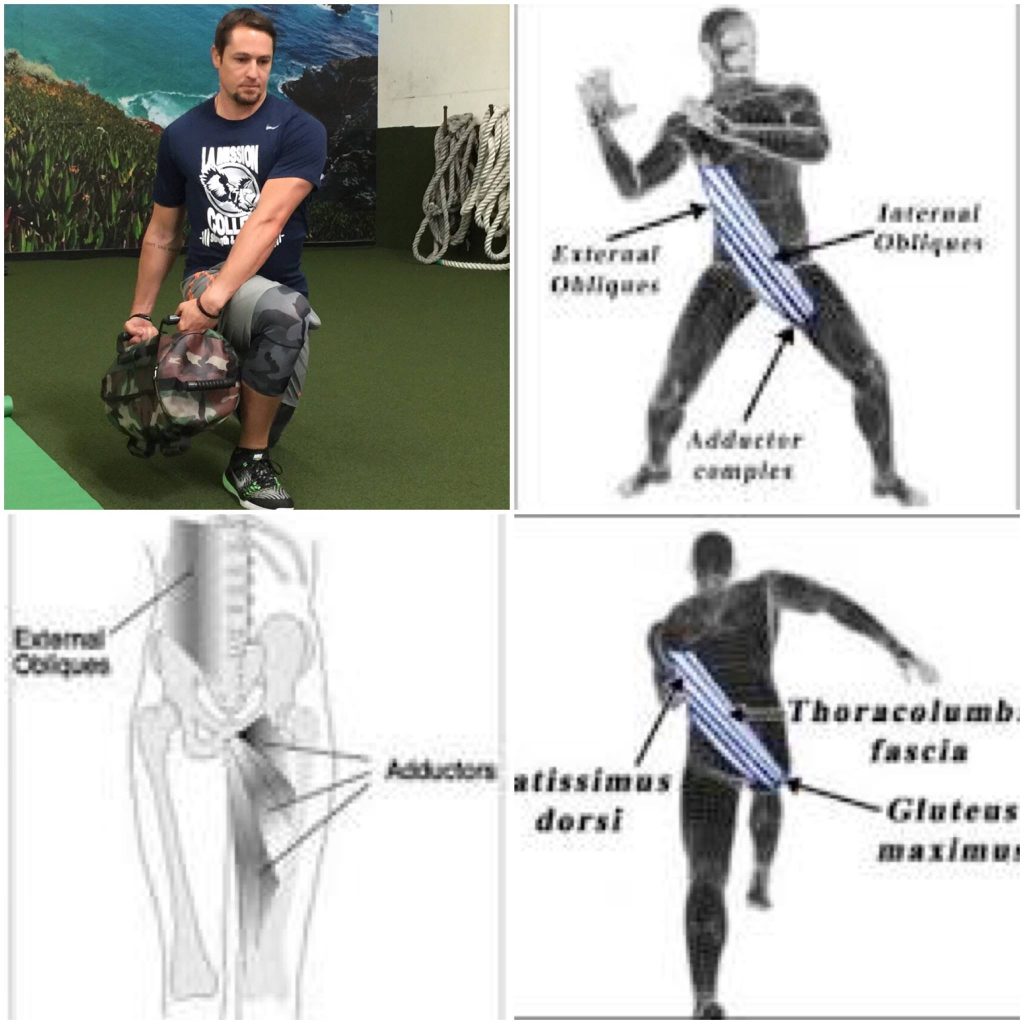 The best leg workouts don’t look just as the muscles, but they think about the connections all throughout the body.
Key 2: The more single leg we become, the more we train what the body wants in lower body workouts.
It is kinda weird that we have such a disconnect of what our body WANTS to do and what we make it do. As per my explanation above, our body is far more designed for single leg based movements than really loving heavy bilateral exercises.
Research shows we often have slightly different joint structures on either side of our body, we have neurological preferences, and something that renown strength coach, Mike Boyle, has been discussing a lot is a bilateral deficit.
What is that?!
Bilateral deficit refers to difference we can produce in force from a single leg (or arm) exercise to bilateral. An example of this would be if one could deadlift 250 on two legs and can use 150 pounds total on a single leg deadlift. The 250 is obviously larger, but that is split between two legs. Therefore, we are actually loading the legs more on the single leg deadlift (the 150 pounds) versus the 125 that splits the 250 pound deadlift.
This is a natural occurrence we should see most of the time. That when we add up what can be done unilaterally on both sides it SHOULD be more than what we do bilaterally. So, a few things….
Why don’t we see that in many cases? The most obvious answer is that people do a poor job building in strength and stability at the same time. In other words, they don’t put in the same time and effort into their leg workouts of more single leg based movements. Not having this bilateral deficit isn’t a good thing and a sign of what you need to emphasize more in your workouts!
Another important point that Coach Boyle brings up in such circumstances is that in the above example we have 250 pounds of load going through our spine, but actually loading the legs less! If our goal in leg workouts is to stress our lower body and not our low back, it makes sense the advantage this provides!
The best leg workouts don’t look just as the muscles, but they think about the connections all throughout the body.
Key 2: The more single leg we become, the more we train what the body wants in lower body workouts.
It is kinda weird that we have such a disconnect of what our body WANTS to do and what we make it do. As per my explanation above, our body is far more designed for single leg based movements than really loving heavy bilateral exercises.
Research shows we often have slightly different joint structures on either side of our body, we have neurological preferences, and something that renown strength coach, Mike Boyle, has been discussing a lot is a bilateral deficit.
What is that?!
Bilateral deficit refers to difference we can produce in force from a single leg (or arm) exercise to bilateral. An example of this would be if one could deadlift 250 on two legs and can use 150 pounds total on a single leg deadlift. The 250 is obviously larger, but that is split between two legs. Therefore, we are actually loading the legs more on the single leg deadlift (the 150 pounds) versus the 125 that splits the 250 pound deadlift.
This is a natural occurrence we should see most of the time. That when we add up what can be done unilaterally on both sides it SHOULD be more than what we do bilaterally. So, a few things….
Why don’t we see that in many cases? The most obvious answer is that people do a poor job building in strength and stability at the same time. In other words, they don’t put in the same time and effort into their leg workouts of more single leg based movements. Not having this bilateral deficit isn’t a good thing and a sign of what you need to emphasize more in your workouts!
Another important point that Coach Boyle brings up in such circumstances is that in the above example we have 250 pounds of load going through our spine, but actually loading the legs less! If our goal in leg workouts is to stress our lower body and not our low back, it makes sense the advantage this provides!
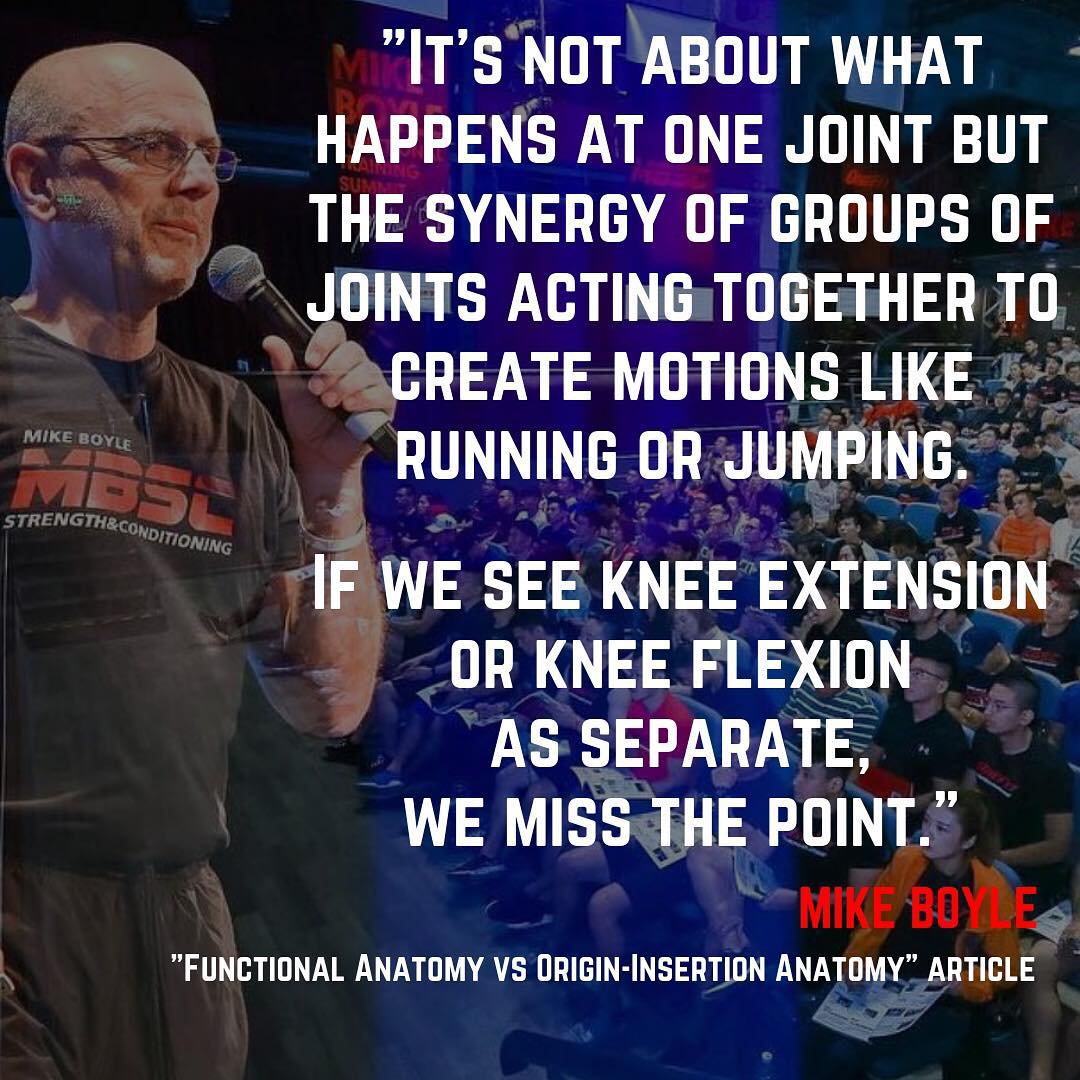 Why does the bilateral deficit case exist? Scientists are still trying to figure out exactly why, but Coach Boyle offers a simple idea, “The brain does not like bilateral exercise. Numerous studies have shown that opposite hemispheres of the brain control movement ( in another words the right side of the brain controls the left side of the body). This is the natural way that the body works. Attempts at simultaneous bilateral contraction is in effect neurologically confusing. In other words the body wants to work one side at a time and, does it more efficiently.”
This is one of MANY reasons we look to build to more single leg exercises. Since our body is designed for locomotion, there are many muscles that are designed to hold our body in place as we are doing something as unstable and complex as walking and running.
Of course the question is HOW can we build people up as so many times people do lack the combination of strength and stability to actually use single leg exercises.
You can see how we can take the hip hinge pattern to many different levels to stress our lower body workouts WHILE making people better.
One of the biggest keys is not JUST single leg exercises, but our body has direction. When we see how to do so like DVRT Master, Paige Fleischmann, demonstrates we see the diversity and means in which we can progress and challenge single leg training.
Smarter fitness isn’t about being different, but finding better. Ways we can accomplish MORE with the time we devote to our training. That opens up a much bigger world of fitness and motivation to train!
Why does the bilateral deficit case exist? Scientists are still trying to figure out exactly why, but Coach Boyle offers a simple idea, “The brain does not like bilateral exercise. Numerous studies have shown that opposite hemispheres of the brain control movement ( in another words the right side of the brain controls the left side of the body). This is the natural way that the body works. Attempts at simultaneous bilateral contraction is in effect neurologically confusing. In other words the body wants to work one side at a time and, does it more efficiently.”
This is one of MANY reasons we look to build to more single leg exercises. Since our body is designed for locomotion, there are many muscles that are designed to hold our body in place as we are doing something as unstable and complex as walking and running.
Of course the question is HOW can we build people up as so many times people do lack the combination of strength and stability to actually use single leg exercises.
You can see how we can take the hip hinge pattern to many different levels to stress our lower body workouts WHILE making people better.
One of the biggest keys is not JUST single leg exercises, but our body has direction. When we see how to do so like DVRT Master, Paige Fleischmann, demonstrates we see the diversity and means in which we can progress and challenge single leg training.
Smarter fitness isn’t about being different, but finding better. Ways we can accomplish MORE with the time we devote to our training. That opens up a much bigger world of fitness and motivation to train!
Newsletter
Sign-up to our newsletter for free, regular training tips.