Smarter Functional Training with Ultimate Sandbag Workouts
 Jessica Bento, Physical Therapist/DVRT Educational Director (Creator of DVRT Restoration, Pelvic Control and Shoulder Course)
People ask me quite a bit, “how did you even get into Ultimate Sandbags?” My story may be unusual, but the lessons I gained may be quite familiar! Being one of the oldest strength training tools in history, you would think the sandbag would be a rather mainstream tool. However, just because something is old doesn’t mean it fits our modern needs, just ask my Walkman!
People love to state that the sandbag has been around forever, yet, it has rarely ever been the focal point of fitness, performance, and therapeutic programs. The fact there has been awareness of the sandbag we lend ourselves to ask three questions:
Jessica Bento, Physical Therapist/DVRT Educational Director (Creator of DVRT Restoration, Pelvic Control and Shoulder Course)
People ask me quite a bit, “how did you even get into Ultimate Sandbags?” My story may be unusual, but the lessons I gained may be quite familiar! Being one of the oldest strength training tools in history, you would think the sandbag would be a rather mainstream tool. However, just because something is old doesn’t mean it fits our modern needs, just ask my Walkman!
People love to state that the sandbag has been around forever, yet, it has rarely ever been the focal point of fitness, performance, and therapeutic programs. The fact there has been awareness of the sandbag we lend ourselves to ask three questions:
- Is the sandbag an effective tool for developing strength and movement?
- Is the tool, as we know it, right for the demands of functional fitness programs?
- Do we truly understand the sandbag and how to correctly incorporate it into program design?
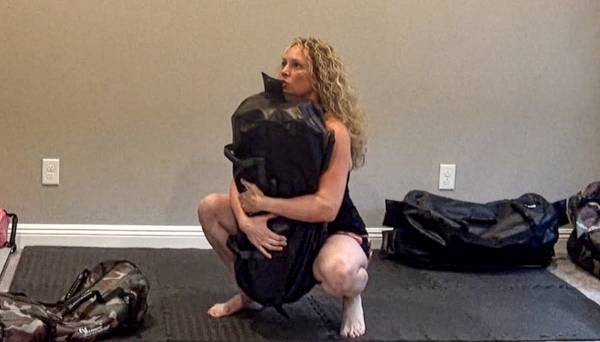 Now I can not only squat pain free, but do so with a lot of weight!
Right away working with the Ultimate Sandbag and the DVRT system, I began to experience reduced pain, and got a great insight into the dysfunctions in my movement mechanics and the compensations that were preventing me from performing certain activities, such as squatting pain free. Today I can not only squat without any pain, but can do so with some appreciable loads. In the 12 years since I have seen DVRT work for myself, I’ve also recognized some pretty dramatic results for those looking for performance and health improvements.
Now I can not only squat pain free, but do so with a lot of weight!
Right away working with the Ultimate Sandbag and the DVRT system, I began to experience reduced pain, and got a great insight into the dysfunctions in my movement mechanics and the compensations that were preventing me from performing certain activities, such as squatting pain free. Today I can not only squat without any pain, but can do so with some appreciable loads. In the 12 years since I have seen DVRT work for myself, I’ve also recognized some pretty dramatic results for those looking for performance and health improvements.
Improving Strength and Movement with the Ultimate Sandbag
Is it JUST about being unstable that makes tools like the Ultimate Sandbag so beneficial and if so, how? When a weight is not static it makes each repetition a little bit different. A common myth is we want a drastic instability with such training tools, but the truth is we are looking at subtle changes to instability just as we would with load, volume, etc. Too much instability in progressing movement typically leads to poor movement patterning. Stability training shouldn’t be a circus trick whether balancing on crazy squishy equipment or having barbells that bounce randomly while you are training. In reality, stability training is more thought out.
Having a slightly unstable load allows us to increase the inter-muscular coordination of the body and quickly identify “disconnects” of the body’s natural kinetic chains. With the Ultimate Sandbag it is often very difficult to simply “muscle through” an exercise which can be commonly achieved with more static implements. Therefore, we get a better idea of movement compensations and strategies.
Variable resistance tools like the Ultimate Sandbag also challenge the often under discussed concept of “movement accuracy”. In other words, being able to optimize efficiency for a specific movement strategy rather than relying on only muscular force, we increase the demands of neurological coordination.
Stability training shouldn’t be a circus trick whether balancing on crazy squishy equipment or having barbells that bounce randomly while you are training. In reality, stability training is more thought out.
Having a slightly unstable load allows us to increase the inter-muscular coordination of the body and quickly identify “disconnects” of the body’s natural kinetic chains. With the Ultimate Sandbag it is often very difficult to simply “muscle through” an exercise which can be commonly achieved with more static implements. Therefore, we get a better idea of movement compensations and strategies.
Variable resistance tools like the Ultimate Sandbag also challenge the often under discussed concept of “movement accuracy”. In other words, being able to optimize efficiency for a specific movement strategy rather than relying on only muscular force, we increase the demands of neurological coordination.
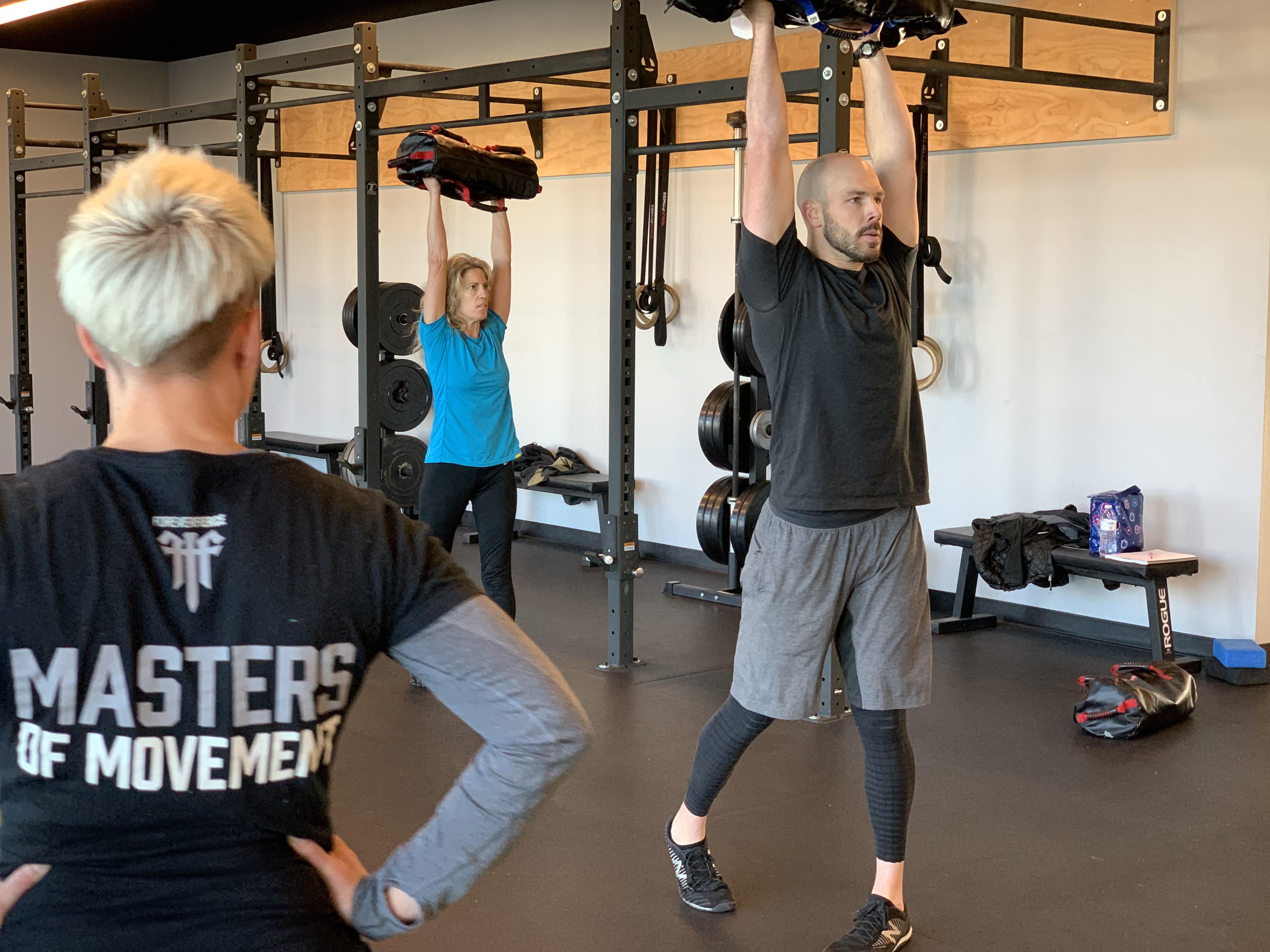 Yet, having the internal load be unstable is just one of the many benefits of DVRT. The Ultimate Sandbag has varying dimensions that can be used to pattern a lift (such as in a squat), or challenge a pattern (with drills such as the MAX Lunge). Manipulating the dimension of the Ultimate Sandbag allows the coach the opportunity to have another layer of progression beyond the standard training variables.
Therefore, I believe that sandbag training CAN be highly effective. Yet, I have some hesitation in giving my full confidence until we answer the other two questions.
https://www.instagram.com/p/CERVxvODX5g/
Yet, having the internal load be unstable is just one of the many benefits of DVRT. The Ultimate Sandbag has varying dimensions that can be used to pattern a lift (such as in a squat), or challenge a pattern (with drills such as the MAX Lunge). Manipulating the dimension of the Ultimate Sandbag allows the coach the opportunity to have another layer of progression beyond the standard training variables.
Therefore, I believe that sandbag training CAN be highly effective. Yet, I have some hesitation in giving my full confidence until we answer the other two questions.
https://www.instagram.com/p/CERVxvODX5g/
A Functional Fitness Tool
In order to answer the second question I have to ask, what are you trying to accomplish?”If you wanted to drive a nail into a wall, would you use a saw? That would seem not only ineffective, but very limited in what you could construct. To answer such a question we would have to possess an agreed upon definition of “functional training. Since the industry has such a varied perspective upon this topic, we propose to narrow our focus on what is considered“functional”by the following definition. “Functional training focuses upon improving the body’s ability to function efficiently and effectively in all planes of motions and angles. Increasing the level of complexity of movement over time to stress the kinetic chains of the body.” If we see functional training in this manner DVRT becomes very important to the overall development of functional fitness. We can build subtle or very dramatic changes to multi-planar movement, teach to reproduce foundational movement patterns in many different angles and positions, as well as stress specific kinetic chains. All of this would not be possible if we did not also possess the correct tool to address these needs. https://www.instagram.com/p/CDi4VcZDec9/ One of the foremost reasons I believe sandbags have never reached the status of being“foundational”is due to the implements history of being a duffel bag with garbage bags on the inside. Not only does this not sound like a very professional tool, but also posed a great deal of challenges.Incorporating Ultimate Sandbags into an Exercise Program
How do you build progression? How do you standardize such a thing so us, as fitness professionals, can not only program, but communicate how to implement such a tool to each other? How do you deal with the unique attributes that an Ultimate Sandbag provides? I was a bit spoiled. My first experience with a sandbag was with Josh’s Ultimate Sandbags. It just made so much sense to me after he explained that his mission was to solve so many issues that the traditional sandbag posed. By doing so, not only did the tool become something unique and valuable, but the system of functional strength training did as well.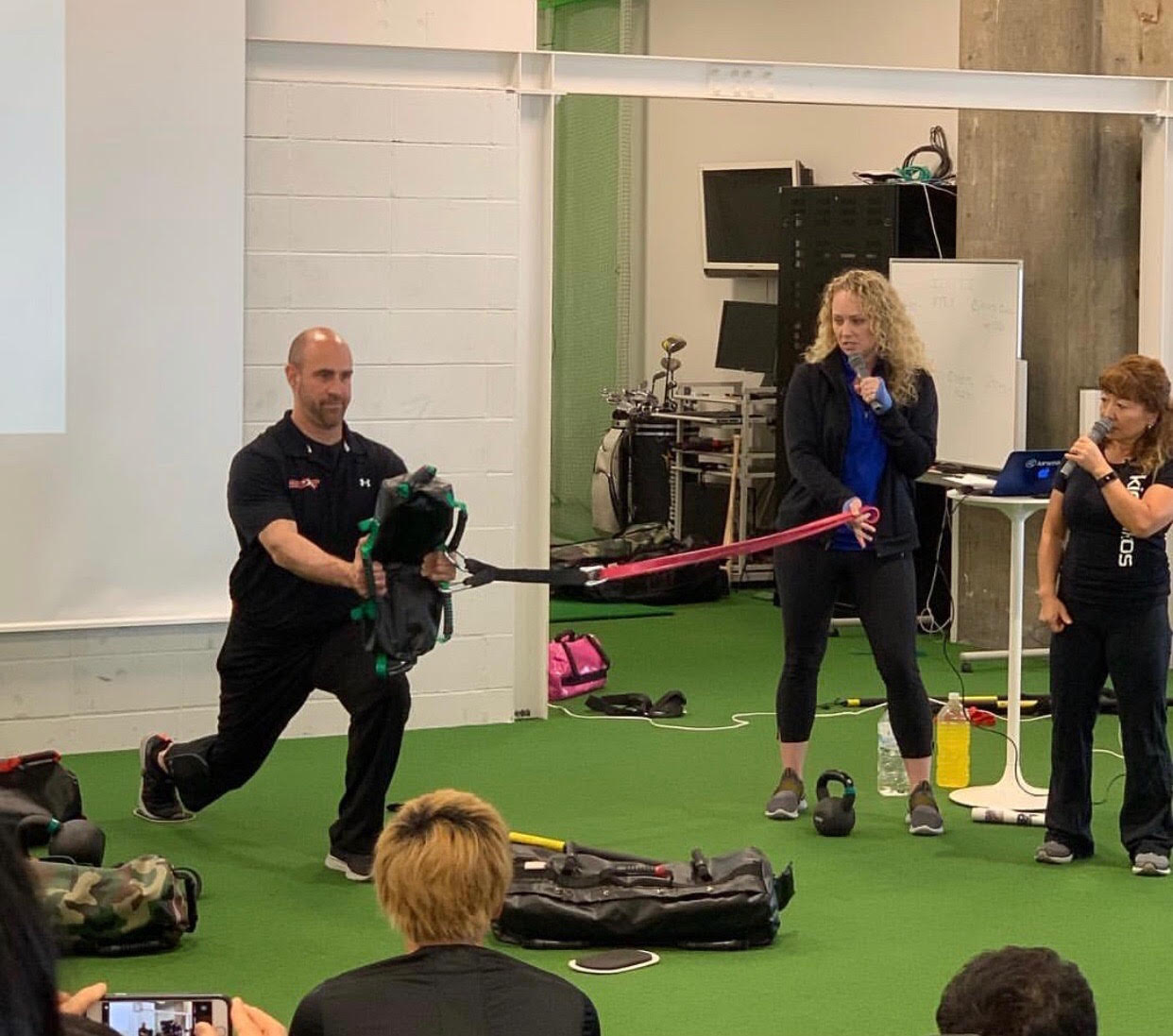 When Josh explained to me how every design feature was so deliberate, I started getting ideas of how we focus on truly build functional strength, not just use a “sandbag”.
After working with the Ultimate Sandbag for some time and coming across my first duffel bag of sand, I realized the great number of limitations that such an implement posed. We couldn’t change grip, we couldn’t control dimension, or even instability for that matter. It became evident that the“traditional”idea of a sandbag became almost impossible to effectively program and progress and probably was a big reason that while most would say sandbags were good training tools, were never staples of functional fitness programs.
As I have grown to understand DVRT I admit I look at functional programs very differently because what the Ultimate Sandbag allows us to accomplish in our ability to address these specific issues. The right tool helped us actually solve both the second and third question at the same time.
The major problem that the Ultimate Sandbag solved was making sense of the confusion that trying to use sandbags creates.
https://www.instagram.com/p/CCvfrqDH3gY/
When you train with the right purpose you get such a better sense of how we develop solutions.
When Josh explained to me how every design feature was so deliberate, I started getting ideas of how we focus on truly build functional strength, not just use a “sandbag”.
After working with the Ultimate Sandbag for some time and coming across my first duffel bag of sand, I realized the great number of limitations that such an implement posed. We couldn’t change grip, we couldn’t control dimension, or even instability for that matter. It became evident that the“traditional”idea of a sandbag became almost impossible to effectively program and progress and probably was a big reason that while most would say sandbags were good training tools, were never staples of functional fitness programs.
As I have grown to understand DVRT I admit I look at functional programs very differently because what the Ultimate Sandbag allows us to accomplish in our ability to address these specific issues. The right tool helped us actually solve both the second and third question at the same time.
The major problem that the Ultimate Sandbag solved was making sense of the confusion that trying to use sandbags creates.
https://www.instagram.com/p/CCvfrqDH3gY/
When you train with the right purpose you get such a better sense of how we develop solutions.
More than Load
All tools have a load component, but the Ultimate Sandbag has both load and dimension that offers us a unique opportunity to build progressive movements by not just manipulating the weight of an implement, but its size as well. There is a misconception that Ultimate Sandbags are always unstable. This is simply not true in both cases of smaller and more compactly filled Ultimate Sandbags. Using a more stable Ultimate Sandbag allows us to either introduce fundamental movement concepts to new trainees, or to help progress to more complex movement patterns. If our tool was ALWAYS unstable it would be very difficult to progress and introduce people to great functional patterns. Dimension can also give us an opportunity to teach important concepts about movement. For example, squatting can be quite difficult for many beginners (sometimes even seasoned lifters) to perform well. By using a larger sandbag in the Bear Hug position we give feedback to the individual and teach how to properly create full body tension which leads to almost a perfect squat, even for the novice. Therefore, when we program and implement sandbags we are going to consider both weight and dimension in our selection. DVRT Master, Cory Cripe shows that different dimensions are even designed to be used for different exercises so we can teach specific movement concepts.Incremental Instability
People that want to use variable resistance tools like the Ultimate Sandbag will often say that they do so because they want the instability that they provide. As I mentioned, there is an incorrect assumption that Ultimate Sandbags are always unstable. The bigger issue is that people do not treat instability in the same manner as load, volume, or density. If I gave a client 100 pounds to squat with and then the following set gave them 400 pounds, you would probably greatly question my ability to provide progressive resistance. That is the issue. Professionals understand that load, volume, density, speed, and range of motion, are all training variables to increase intensity, yet, they often fail to realize so is instability. Fitness Lying Down Coach, Megan Berner, shows how we build smarter instability and progression into our DVRT Ultimate Sandbag Workouts. In fact, the failure of some of the unstable surface equipment in the past has been due to the inability to gradually introduce instability. DVRT recognizes that we need to look at how we can introduce instability in the smallest ways and be able to build progressions off of these concepts. That is why we have four base mediums we look to build instability.- Holding position of the load
- The body position while lifting the load
- Plane of motion
- Instability of the implement itself
| Upper Body Dominant Progressions | |||
| Phase 1 | Phase 2 | Phase 3 | Phase 4 |
| Body Position | Stability of Implement Itself | Holding Position | Plane of Motion |
| Lower Body Dominant Progressions | |||
| Phase 1 | Phase 2 | Phase 3 | Phase 4 |
| Holding Position | Body Position | Stability of Implement Itself | Plane of Motion |
- Press
- Military Press
- Sprinter Press
- Bilateral Press
- Off-Set Grip Press (this introduces frontal plane forces)
- Arc Press (this creates stronger frontal plane and introduces transverse plane forces)
Newsletter
Sign-up to our newsletter for free, regular training tips.