How To Build Better Mobility Training Through Functional Strength
 I love being in front of people and talking about what we do at my gym, Fitness Lying Down (FLD), using the DVRT system! And recently I had the opportunity to present in front of an Exercise & Sport Science 300 level class. I’m not quite sure they actually knew what they were about to get in!
The main focus of my presentation was to talk about how we view functional strength training at FLD and the ways we incorporate it through programming and coaching. And, of course, what I love to do is brag up our clients and how they can make these very complex DVRT drills look so simple (and I had to inform the class that these amazing sandbaggers could only do this because of trusting the process and learning from the system of training).
As I went through the presentation many great questions were asked, but the one that stood out because it was so timely…as this topic was about to be the very next slide was, ‘With all this strength training, and being functional, where do you put mobility training in your programs?’
And I want to be as honest with you as I was with this class. When you have your boots on the ground and working in the trenches as a fitness professional, you don’t have a whole lot of time to train a client per week. At best we see clients 3x/week, but on average we are happy to see them twice a week. With 168 hours in a 7-day week and we see them on average 2 of those hours — that doesn’t give us too much time to work on their many fitness goals. So can we really afford to set a lot of time to “mobility training?” As I told this class — what if I can give you strength training AND mobility without separating the two?
I love being in front of people and talking about what we do at my gym, Fitness Lying Down (FLD), using the DVRT system! And recently I had the opportunity to present in front of an Exercise & Sport Science 300 level class. I’m not quite sure they actually knew what they were about to get in!
The main focus of my presentation was to talk about how we view functional strength training at FLD and the ways we incorporate it through programming and coaching. And, of course, what I love to do is brag up our clients and how they can make these very complex DVRT drills look so simple (and I had to inform the class that these amazing sandbaggers could only do this because of trusting the process and learning from the system of training).
As I went through the presentation many great questions were asked, but the one that stood out because it was so timely…as this topic was about to be the very next slide was, ‘With all this strength training, and being functional, where do you put mobility training in your programs?’
And I want to be as honest with you as I was with this class. When you have your boots on the ground and working in the trenches as a fitness professional, you don’t have a whole lot of time to train a client per week. At best we see clients 3x/week, but on average we are happy to see them twice a week. With 168 hours in a 7-day week and we see them on average 2 of those hours — that doesn’t give us too much time to work on their many fitness goals. So can we really afford to set a lot of time to “mobility training?” As I told this class — what if I can give you strength training AND mobility without separating the two?
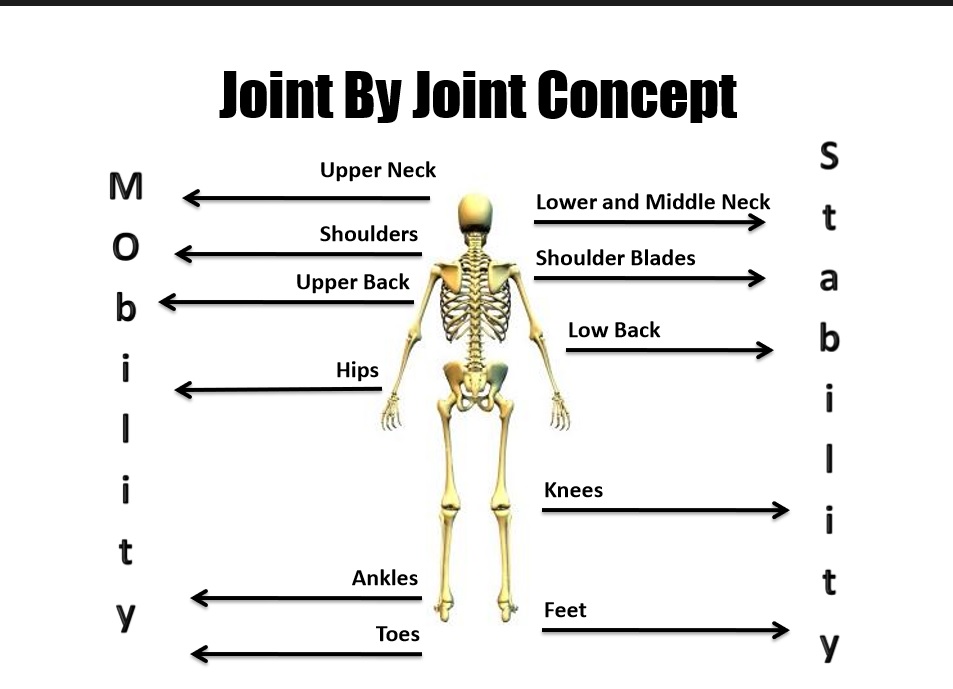
Seems too good to be true? What I’ve learned from DVRT that has really made a big impact to my approach for programming is how proximal stability provides for distal mobility. What does that mean? When I can light up the core muscles (proximal) the brain then gives permission to the distal joints (shoulders & hips) to be more mobile. Here’s an example I love to give…View this post on Instagram
 Picture in your mind your grandma, grandpa, someone you would consider older. How do they walk? Are they rounded in the shoulders? Do they shuffle more than walk with confidence? Why is that? We quickly say that this population has poor posture from reading the newspaper (is that still a thing?), spending lots of time scrolling on their phones, or watching too much Wheel of Fortune. We attribute their poor posture with tight muscles because of constantly being bent forward, as they perform various daily tasks.
But…what if their posture was affected by a de-conditioned core (proximal instability)? And the rounding of their shoulders is what we call flexion because the brain feels strong and safe with this trunk posture. What would you do if you were at a baseball game and a ball was hit foul into the stands where you were sitting? More than likely you would crouch into the fetal position to protect your head and body — you know, where the important organs are. Well, since the beginning of time our brain’s main responsibility is to keep us alive and when it feels threatened it will do what is necessary to protect you. So our dear grandparents’ brains are keeping them safe by placing them in a quasi-fetal position and limiting their stride length to prevent falling.
Picture in your mind your grandma, grandpa, someone you would consider older. How do they walk? Are they rounded in the shoulders? Do they shuffle more than walk with confidence? Why is that? We quickly say that this population has poor posture from reading the newspaper (is that still a thing?), spending lots of time scrolling on their phones, or watching too much Wheel of Fortune. We attribute their poor posture with tight muscles because of constantly being bent forward, as they perform various daily tasks.
But…what if their posture was affected by a de-conditioned core (proximal instability)? And the rounding of their shoulders is what we call flexion because the brain feels strong and safe with this trunk posture. What would you do if you were at a baseball game and a ball was hit foul into the stands where you were sitting? More than likely you would crouch into the fetal position to protect your head and body — you know, where the important organs are. Well, since the beginning of time our brain’s main responsibility is to keep us alive and when it feels threatened it will do what is necessary to protect you. So our dear grandparents’ brains are keeping them safe by placing them in a quasi-fetal position and limiting their stride length to prevent falling.
 Now you may not be as limited as the above example. However, pretty much everyone that comes to Fitness Lying Down lists core strength as a high priority for them (even though they might not realize what that means)! So if the general population understands the value of core strength — meaning they lack it to begin with — how is that impacting their mobility? As I mentioned above: proximal stability provides for distal mobility and when the core isn’t strong or stable the brain will limit the ranges of motion in order to protect the body because of this perceived weakness. And that lack of mobility gone unchecked will add more compensations and poor body mechanics to daily movement. Not a good thing for people just trying to feel better throughout their daily lives.
So we hear someone needs mobility and we dig in our playbook for our favorite stretches, or whatever we saw recently on social media for tight hips and shoulders. BUT if their “tightness” is a core thing, what good is it to do traditional and/or popular stretches. At Fitness Lying Down our first step to helping clients with mobility is to teach them how to properly use their hands & feet…cue the double take!
As counterintuitive as this may appear, the hands & feet are the front lines of creating core stability. When we can meaningfully engage with our environment using our 10 fingers and toes all of a sudden the core muscles turn on, you don’t have to use those nonsensical coaching cues we’ve all used in the past to get a client to tighten their glutes or engage the core; it’s an automatic cause and affect situation. And using specific functional fitness tools can also provide even more effectiveness when training mobility through strength training.
This fitness pro came to one of my DVRT workshops unable to squat without pain and now she was squatting LOWER than she ever had and without pain!
Allow me to explain…
If you know me at all and have followed me on the inter-webs you probably can see me easily sell how dead bugs, bird dogs, hip bridges, or around the worlds are very effective drills to increase mobility, but we are talking about strength training here and please don’t think that those previously mentioned exercises WON’T make you strong so I want to use the more traditional strength training exercises to prove my point on how they can improve mobility.
Now you may not be as limited as the above example. However, pretty much everyone that comes to Fitness Lying Down lists core strength as a high priority for them (even though they might not realize what that means)! So if the general population understands the value of core strength — meaning they lack it to begin with — how is that impacting their mobility? As I mentioned above: proximal stability provides for distal mobility and when the core isn’t strong or stable the brain will limit the ranges of motion in order to protect the body because of this perceived weakness. And that lack of mobility gone unchecked will add more compensations and poor body mechanics to daily movement. Not a good thing for people just trying to feel better throughout their daily lives.
So we hear someone needs mobility and we dig in our playbook for our favorite stretches, or whatever we saw recently on social media for tight hips and shoulders. BUT if their “tightness” is a core thing, what good is it to do traditional and/or popular stretches. At Fitness Lying Down our first step to helping clients with mobility is to teach them how to properly use their hands & feet…cue the double take!
As counterintuitive as this may appear, the hands & feet are the front lines of creating core stability. When we can meaningfully engage with our environment using our 10 fingers and toes all of a sudden the core muscles turn on, you don’t have to use those nonsensical coaching cues we’ve all used in the past to get a client to tighten their glutes or engage the core; it’s an automatic cause and affect situation. And using specific functional fitness tools can also provide even more effectiveness when training mobility through strength training.
This fitness pro came to one of my DVRT workshops unable to squat without pain and now she was squatting LOWER than she ever had and without pain!
Allow me to explain…
If you know me at all and have followed me on the inter-webs you probably can see me easily sell how dead bugs, bird dogs, hip bridges, or around the worlds are very effective drills to increase mobility, but we are talking about strength training here and please don’t think that those previously mentioned exercises WON’T make you strong so I want to use the more traditional strength training exercises to prove my point on how they can improve mobility.
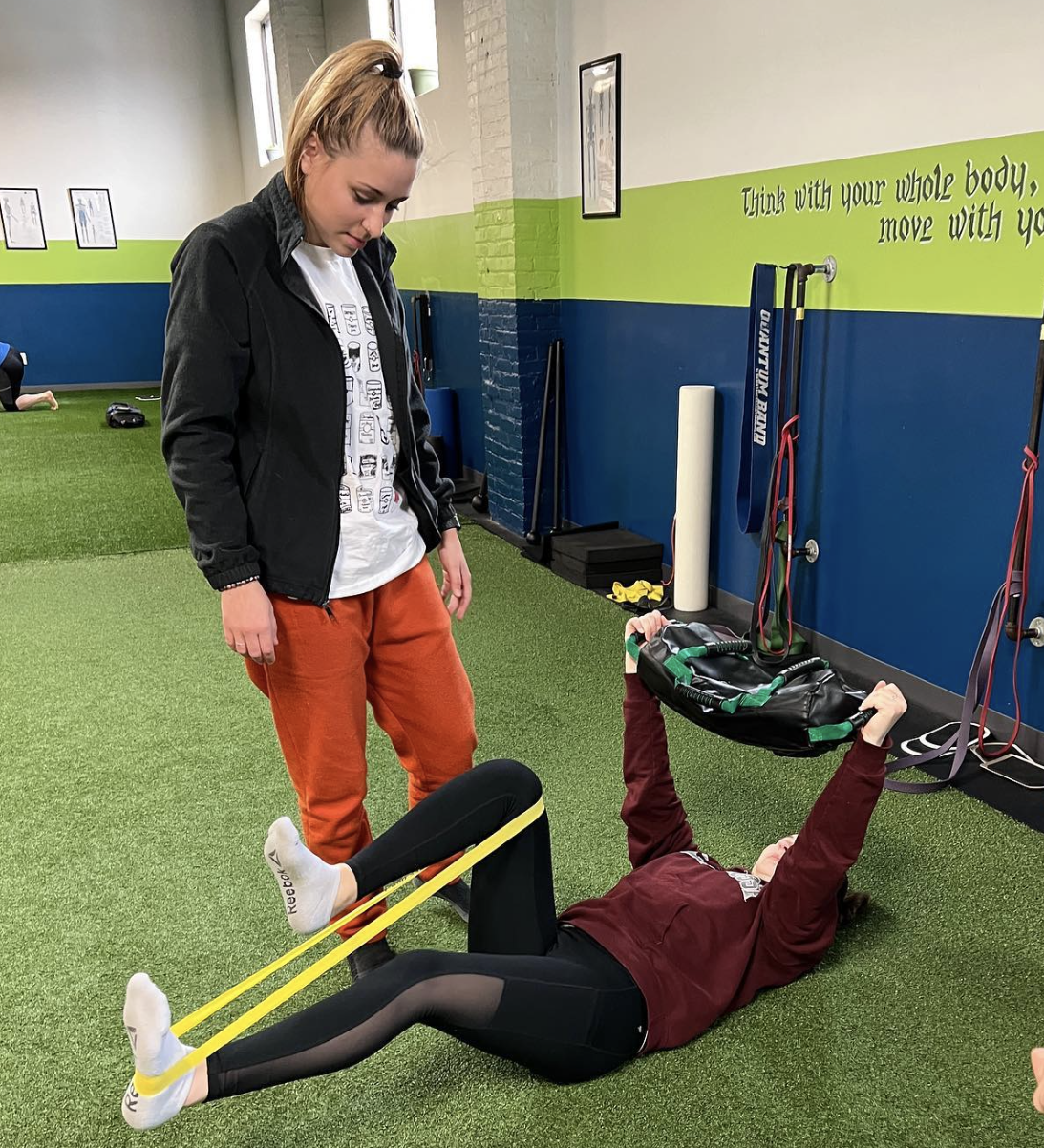 I want to show how three squat exercises can improve your mobility through proximal stability. Let’s begin with our beloved press out squat using the Ultimate Sandbag (again, tools matter). Ensuring you have a solid grip on the USB and feet planted into the ground will set up this squat success. There are times where we will dial up the Mini-Band from Perform Better to help educate about properly using the feet. With the hands, puling the USB apart as the press out is executed is where we make that top connection with the core muscles through the lats, and coupled with the feet driving out against the Mini-Band (while the toes are grabbing the ground) provides the adequate glute response to maximize proximal stability and this my friends is how shoulder and hip mobility are increased with a popular strength training exercise.
Okay, okay, okay — you might be thinking about how this exercises is really not maximally loaded like a “traditional” squat exercise. Let me introduce you to a go to BIG squat exercise that will give you just as much bang for your buck as a barbell back squat: the bear hug squat. With the Ultimate Sandbag in the bear hug holding position, the focus is to grab onto the bag and try to rip it apart (I like to cue how Superman comes out of the phone booth pulling apart his shirt to reveal the iconic S on his uniform). This strong holding position will recruit the lats once again and now the dimension of the USB (especially if you’re using a burly) really forces the feet to anchor into the ground. So here we are again using a specific training tool to improve hip and shoulder mobility, but this time using a load that will offer you an effective squat experience.View this post on Instagram
Now this third squat might not really appear to be a squat, but there is some serious benefits from performing split squats. With this drill we now will place the Ultimate Sandbag in the front loaded position so our lats can do what they do to stabilize. As a result of the unstable body position, all 26 bones in each foot are working overtime to keep you stable. Now as the knee drives to the floor, a slight turn with the shoulders towards the top leg gives a little bit more opportunity for the core to stabilize, yielding even more mobility!View this post on Instagram
And just like that, there is no reason to separate mobility from strength training. I provided squats as an example, but if you travel down the many rabbit holes of DVRT you will discover that any exercise with the right tool can help improve mobility even if you’re not looking for it. That is what I wanted to break down in the video below, how fast we can create better mobility training solutions by using tools that help us create a greater impact. This is something that other popular tools in the industry cannot provide. Until the next time, enjoy life and keep slingin’ sand! Don’t miss saving 25% all throughout DVRT with our fall sale by using code “fall25” HERE and absolutely do NOT miss Cory Cripe leading our FIRST live DVRT online workshop and take advantage of our early bird and get a FREE Ultimate Sandbag HEREView this post on Instagram
Newsletter
Sign-up to our newsletter for free, regular training tips.