Helping Low Back Pain & Reaching Your Fitness Goals
 Steve Di Tomaso, DVRT Master (Envision Fitness)
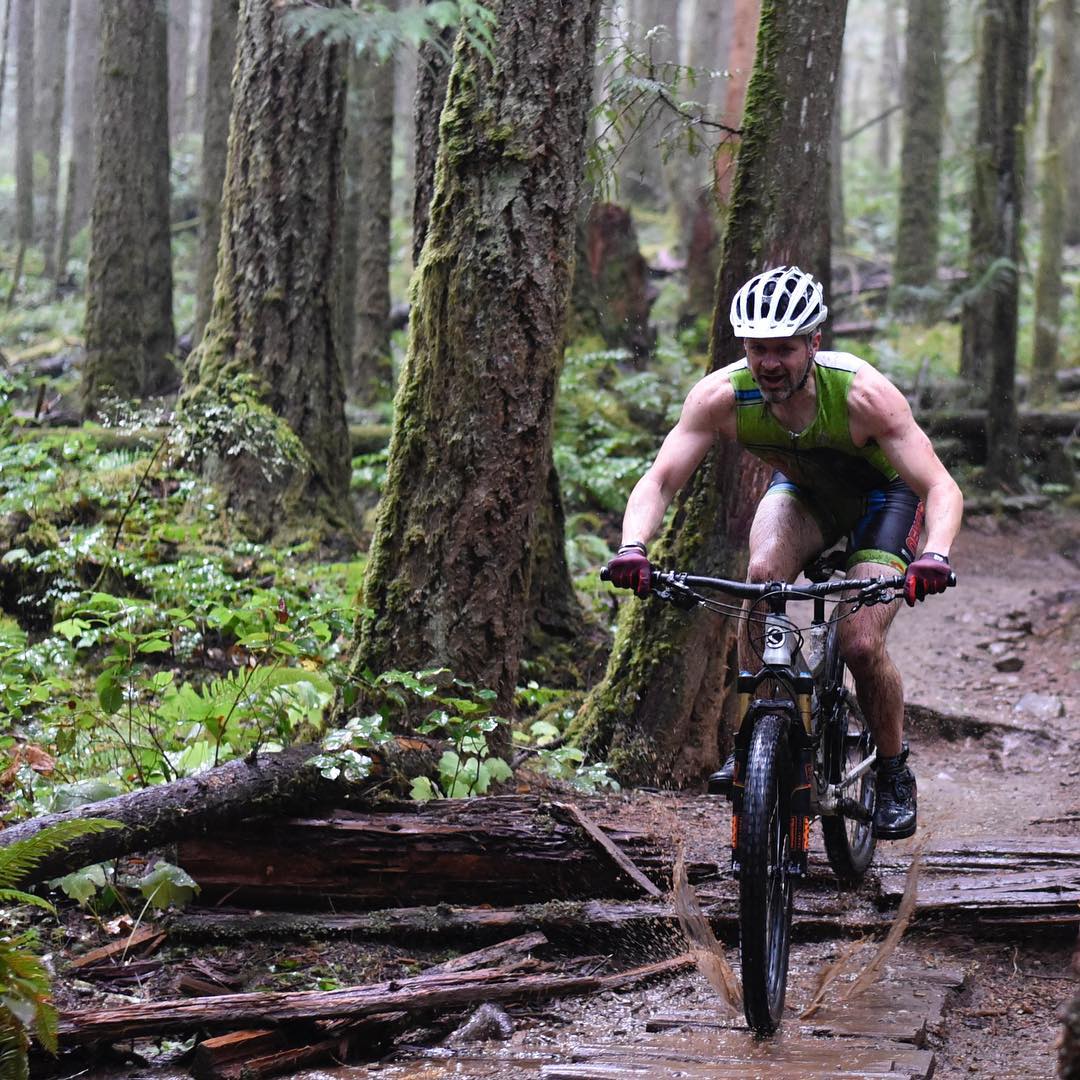
Injury has been one of my best teachers and 2017 was no different. After a successful year in off-road endurance sport it was time to recover from the damage I had done. Acute injuries are a risk of the sport and I had managed to have a streak of bad luck. In the last 6 weeks of the race season I fractured my fifth and then fourth toe within three weeks of each other. I managed to compete in the last two events of the season, but training to run was not a possibility. After the season finished in October I took a 10 week break from running as I let my 41 year old bones heal.
I hit the ground running in January of 2018. Naturally, I signed up for a Strava challenge that would hold me to be accountable to putting in some much needed run volume. Having a training history of completing weeks that were well over 100 kms I did not bat an eye when it came to running 80 kms over a two week period. In retrospect, I should have been more conservative in my return. My body had been deconditioned to the impact of running and I was setting up for injury.
Steve Di Tomaso, DVRT Master (Envision Fitness)
Injury has been one of my best teachers and 2017 was no different. After a successful year in off-road endurance sport it was time to recover from the damage I had done. Acute injuries are a risk of the sport and I had managed to have a streak of bad luck. In the last 6 weeks of the race season I fractured my fifth and then fourth toe within three weeks of each other. I managed to compete in the last two events of the season, but training to run was not a possibility. After the season finished in October I took a 10 week break from running as I let my 41 year old bones heal.
I hit the ground running in January of 2018. Naturally, I signed up for a Strava challenge that would hold me to be accountable to putting in some much needed run volume. Having a training history of completing weeks that were well over 100 kms I did not bat an eye when it came to running 80 kms over a two week period. In retrospect, I should have been more conservative in my return. My body had been deconditioned to the impact of running and I was setting up for injury.
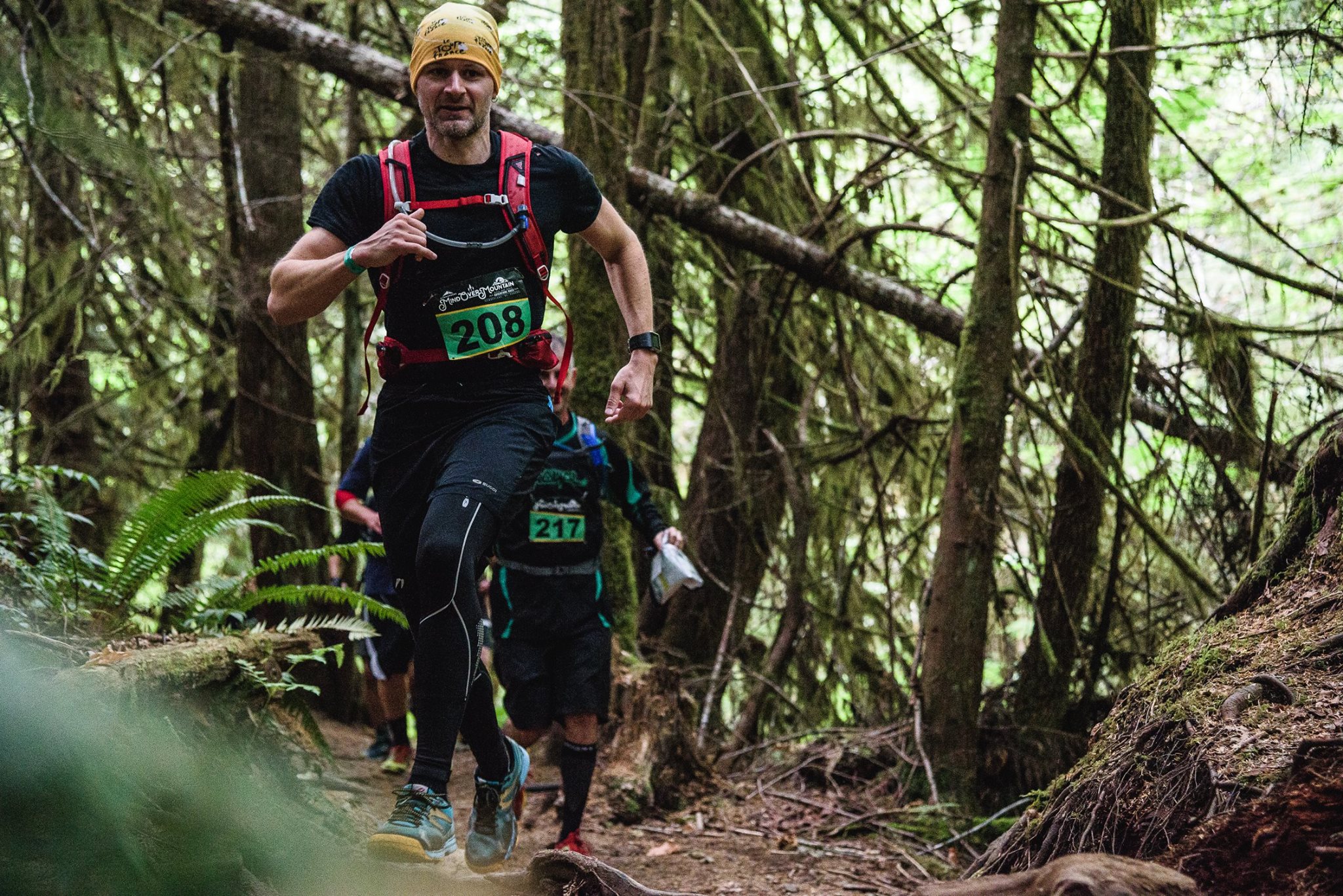 It’s March and I had been back running consistent for a couple of months, but I wasn’t feeling like my usual self. My low back was aching and my shins became sensitive to touch. Not accepting that I was just ‘getting old’, I sought to find causation. I hadn’t spent time analyzing my running technique for years, but it was time to re-evaluate. My cadence had slowed, causing more impact per stride, but more alarmingly I had a lot of movement in my pelvis.
Running is essentially alternating single leg plyometrics for thousands of repetitions. Every running step can put 6-8x of your body weight through your foot. If compromised links in the chain exist it will not take much time before they are expressed as pain or injury. Ideally the pelvis maintains a neutral position through the running stride but mine was shifting side to side while weight bearing and tilting forward while I finished my stride which was causing undue stress on my low back. Awareness alone was not going to resolve my mechanics. It was time to correct the course of my running by application of DVRT principles.
If I was going to get back to running healthy, I needed to be better on one foot. I backed off my run volume and intensity to focus on cadence and foot placement while complementing my program with focused strength training. Over the next few months my strength training would pay dividends. I was back to my usual running self and smashing local run segment times.
It’s March and I had been back running consistent for a couple of months, but I wasn’t feeling like my usual self. My low back was aching and my shins became sensitive to touch. Not accepting that I was just ‘getting old’, I sought to find causation. I hadn’t spent time analyzing my running technique for years, but it was time to re-evaluate. My cadence had slowed, causing more impact per stride, but more alarmingly I had a lot of movement in my pelvis.
Running is essentially alternating single leg plyometrics for thousands of repetitions. Every running step can put 6-8x of your body weight through your foot. If compromised links in the chain exist it will not take much time before they are expressed as pain or injury. Ideally the pelvis maintains a neutral position through the running stride but mine was shifting side to side while weight bearing and tilting forward while I finished my stride which was causing undue stress on my low back. Awareness alone was not going to resolve my mechanics. It was time to correct the course of my running by application of DVRT principles.
If I was going to get back to running healthy, I needed to be better on one foot. I backed off my run volume and intensity to focus on cadence and foot placement while complementing my program with focused strength training. Over the next few months my strength training would pay dividends. I was back to my usual running self and smashing local run segment times.
 These are the three key moves that I used to develop single leg stability for running. While the exercises listed below CAN be great but MUST be done well. I’d been performing split squats and lunges in my programs prior to refocusing my efforts and I realized that I had NOT been doing them well. Sure, the general joint angles looked okay, but my foot stance was very narrow which compensated for a lack of hip stability. Pay close attention to the exercise tips; proper execution for these movements is everything.
1. Split Squat
The split squat is a great starting place when looking to develop single leg stability as you can use two feet to help with your positioning.
Tips:
These are the three key moves that I used to develop single leg stability for running. While the exercises listed below CAN be great but MUST be done well. I’d been performing split squats and lunges in my programs prior to refocusing my efforts and I realized that I had NOT been doing them well. Sure, the general joint angles looked okay, but my foot stance was very narrow which compensated for a lack of hip stability. Pay close attention to the exercise tips; proper execution for these movements is everything.
1. Split Squat
The split squat is a great starting place when looking to develop single leg stability as you can use two feet to help with your positioning.
Tips:
- Start in half kneeling with shin and femur at 90 degrees and feet positioned at hip width.
- Stay tall and drive into the ground with both feet until you rise to the limit of your hip range of motion. Expect to feel a stretch in the hip flexor of your back leg.
- Load the USB in front hold prior to an asymmetrical load position such as the shoulder.
- Progress from the building competency in the split squat (maintaining the hip width foot stance that you built previously)
- Don’t add the balance step to the reverse lunge until you have spent some time building proficiency with the rear step.
- Modify the holding position from bilateral to asymmetrical prior to changing adding the balance step
- Build proficiency with the hinge and progress from a bilateral, sprinter stance, and drop step
- Adding the balance step will increase the duration of holding single leg balance making your feet and lower leg muscles work overtime
Newsletter
Sign-up to our newsletter for free, regular training tips.