Re-Thinking Functional Training
 Talking theory is great and citing research is very important, but in the end, I think nothing tells more about what a person actually believes in than the programs he or she creates. After looking at program after program and workout after workout there is something that really astounds me. The fact we aren’t as movement oriented as we believe! The truth is that we misunderstand functional training quite a bit!!
What do I mean? Many coaches like to brag that their programs are functional training because they squat, they deadlift, they press, and they pull-up. Heck, some even throw in a bit of running, crawling, and handstands. But that still keeps us from really understanding many important aspects of functional training.
We are definitely better as an industry than we use to be. Instead of seeing purely muscles in isolation, we now recognize more integrated movement patterns that show how we actually create movement. This isn’t a difference in semantics, but takes into the account the powerful role of the nervous system. The intermuscular coordination (how muscles work together to create a movement) that improves with more functional training based programs is what professionals believe creates better development in all around fitness. Yet, we are still missing a great deal of what actually is meant by functionally based training and advancing these strategies.
Talking theory is great and citing research is very important, but in the end, I think nothing tells more about what a person actually believes in than the programs he or she creates. After looking at program after program and workout after workout there is something that really astounds me. The fact we aren’t as movement oriented as we believe! The truth is that we misunderstand functional training quite a bit!!
What do I mean? Many coaches like to brag that their programs are functional training because they squat, they deadlift, they press, and they pull-up. Heck, some even throw in a bit of running, crawling, and handstands. But that still keeps us from really understanding many important aspects of functional training.
We are definitely better as an industry than we use to be. Instead of seeing purely muscles in isolation, we now recognize more integrated movement patterns that show how we actually create movement. This isn’t a difference in semantics, but takes into the account the powerful role of the nervous system. The intermuscular coordination (how muscles work together to create a movement) that improves with more functional training based programs is what professionals believe creates better development in all around fitness. Yet, we are still missing a great deal of what actually is meant by functionally based training and advancing these strategies.
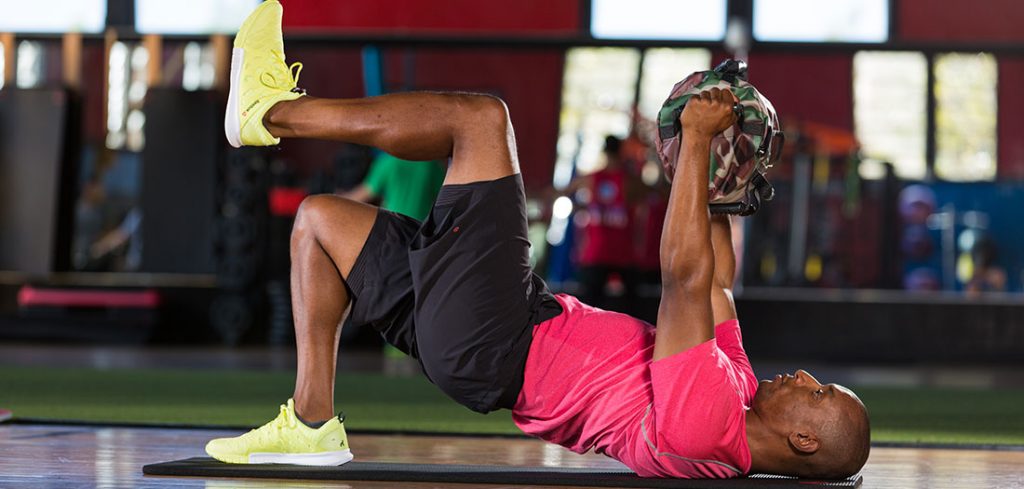 This type of DVRT hip bridge represents functional training more than the traditional version because how we are looking to connect the natural chains of the body!
While the K.I.S.S. method (keep it simple stupid) is a good theory for introductory strength training, adhering to this method exclusively leads to what Scott Sonnon calls the S.I.S.S. method (stuck in stupid simplicity). How does this apply to our world of functionally based training? Most coaches see movement patterns in the following manner:
This type of DVRT hip bridge represents functional training more than the traditional version because how we are looking to connect the natural chains of the body!
While the K.I.S.S. method (keep it simple stupid) is a good theory for introductory strength training, adhering to this method exclusively leads to what Scott Sonnon calls the S.I.S.S. method (stuck in stupid simplicity). How does this apply to our world of functionally based training? Most coaches see movement patterns in the following manner:
- Squat
- Lunge
- Hip Hinge
- Vertical Push
- Vertical Pull
- Horizontal Push
- Horizontal Pull
- Rotation
- Trunk Flexion
- Trunk Anti-Flexion/Extension
- Trunk Anti-Rotation
- Anterior Oblique System: External and internal oblique with the opposing leg’s adductors and intervening anterior abdominal fascia.
- Posterior Oblique System: The lat and opposing glute maximus.
- Deep Longitudinal System: Erectors, the innervating fascia and biceps femoris.
- Lateral System: Glute medius and minimus and the opposing adductors of the thigh
- Staggered Kettlebell One-Arm Swings
- Rear Leg Loaded Sandbag Shoulder Forward Lunge
- Split Stance Around the Worlds
- Deceleration Step Deadlift
- Walking Lunge with Balance Step
- Walking Sled Pulls
Very simply, as the name implies, the lateral system provides lateral stability. Not to be confused with lateral motion, the lateral system is often used to create stability in the pelvis during walking, stepping, etc. Often we overlook this system and it may be very unwise, as it may lead to issues such as Trendelenburg gait. Trendelenburg gait has been linked to many other issues, such as pain in the hip, poor knee tracking, and possibly issues with ankle sprains and increased ACL incidences in female athletes.
Examples of Exercises to Enhance the Lateral System:
- Split Stance Medicine Ball Chest Passes
- Kettlebell Off-Set Rack Loaded Step-ups
- Sandbag Rotational Lunges
Newsletter
Sign-up to our newsletter for free, regular training tips.